


Essaouira Mogador: history, culture and news from the pearl of the Atlantic
By Mogador Conciergerie · 9 September 2025 · 13 min read
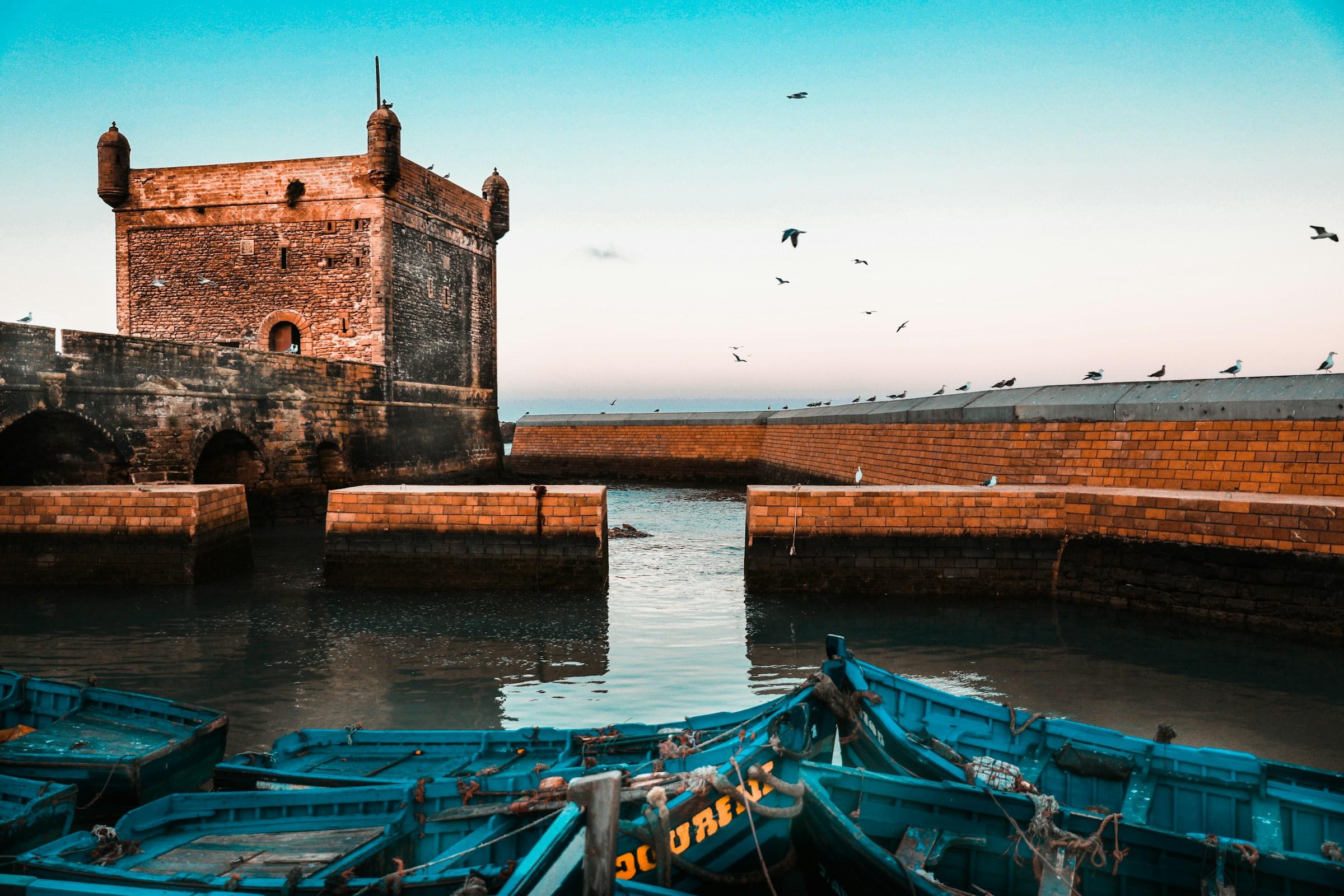
Essaouira, once known as Mogador, is an old soul shaped by the trade winds and carried towards tomorrow by the winds of modernity. Set between ocean and ramparts, ‘the well-designed one’ tells its story in every lane whitened by salt and painted blue: a double face of centuries-old heritage and new horizons.
On one side, the UNESCO-listed medina, laid out according to the strict rules of Vauban’s military architecture, bears witness to the genius of Cornut and to the cultural exchanges that shaped the so-called city of the wind.
On the other, 2025 is shaping up as the year in which Essaouira Mogador begins a new chapter: between tourism initiatives, cultural vitality and urban renewal, the town is getting ready to set its course for the future.
In this article, I invite you to set off on a real journey, neither nostalgic nor futuristic, but firmly rooted here, in Essaouira.
Essaouira Mogador: a history between winds and oceans
The origins of the name Mogador and its historic legacy
Mogador: from the Phoenicians to the Portuguese
Essaouira, called Mogador by the Portuguese, belongs to a history as long as an ocean of stories. From the middle of the first millennium BC, the Phoenicians settled on the islet of the Purpuraires, making it a major trading post for the production of purple, a royal dye in antiquity.
In the 1st century, the Romans occupied the islet for a time, as the remains of a villa and a necropolis attest. These successive civilisations left a lasting memory on this sand, swept by the trade winds, that we still gaze at today.
In 1506, the Portuguese built a Castelo Real and ramparts on this turbulent shore, turning Mogador into a strategic outpost on the sea routes. The local population, however, reacted fiercely. In 1510, faced with Berber resistance, the Portuguese abandoned their fortress, ending their attempt to settle on these restless coasts.
Essaouira: the birth of the medina in the 18th century
The real turning point came in 1760, with Sultan Mohammed ben Abdallah. He commissioned the military architect Théodore Cornut, a disciple of Vauban, to build a new medina. It was laid out on a geometric plan, in keeping with ‘the well-designed one’, the meaning of Essaouira in Arabic.
The town was born with its walls, its bastions, its sturdy gates such as Bab el‑Marsa, and its kasbah. Within a few decades it became the kingdom’s diplomatic capital and international trading port.
Essaouira, a crossroads of cultures
The strategic role of its port in Atlantic trade
Essaouira’s port was built in 1770, barely ten years after the medina, as an opening onto the wide Atlantic. It became Marrakech’s gateway to the sea, a relay between the Saharan caravans and the Western world.
From 1765 to 1865, Essaouira handled 50% of the kingdom’s shipping tonnage and 60% of its foreign trade. This performance earned it the name ‘port of Timbuktu’, a major hub for trade in gold, spices and textiles.
Jewish, Arab, Berber and European influences
The town became a true patchwork of cultures. Jews, Arabs, Berbers and Europeans converged here like winds over a bay. Jews, often artisans and merchants, settled from the 18th century, sometimes even before the town’s formal founding, in Diabat or in the young medina.
To this was added the traditional Moroccan presence: the Berber community, Arab-Islamic influence, then diplomatic and commercial exchanges with Europe. This fusion enriched the urban fabric, social life and local creativity.
The medina of Essaouira Mogador, a UNESCO-listed treasure
A unique architecture
Ramparts, bastions and monumental gates
The medina, a UNESCO World Heritage Site since 2001, stretches its ramparts over several hundred metres along the Atlantic side.
Its Vauban-style fortifications, with artillery platforms, stairways and watchtowers, defy the waves and time. The Sqala de la Kasbah, backing onto the ocean, displays a battery of some twenty Spanish cannons; the Sqala du Port, built in 1769, stands opposite Bab el‑Marsa, the monumental gate linking the town to the port. These structures give Essaouira the fortified charm one might call ‘the shield against oblivion’.
The signature white and blue lanes
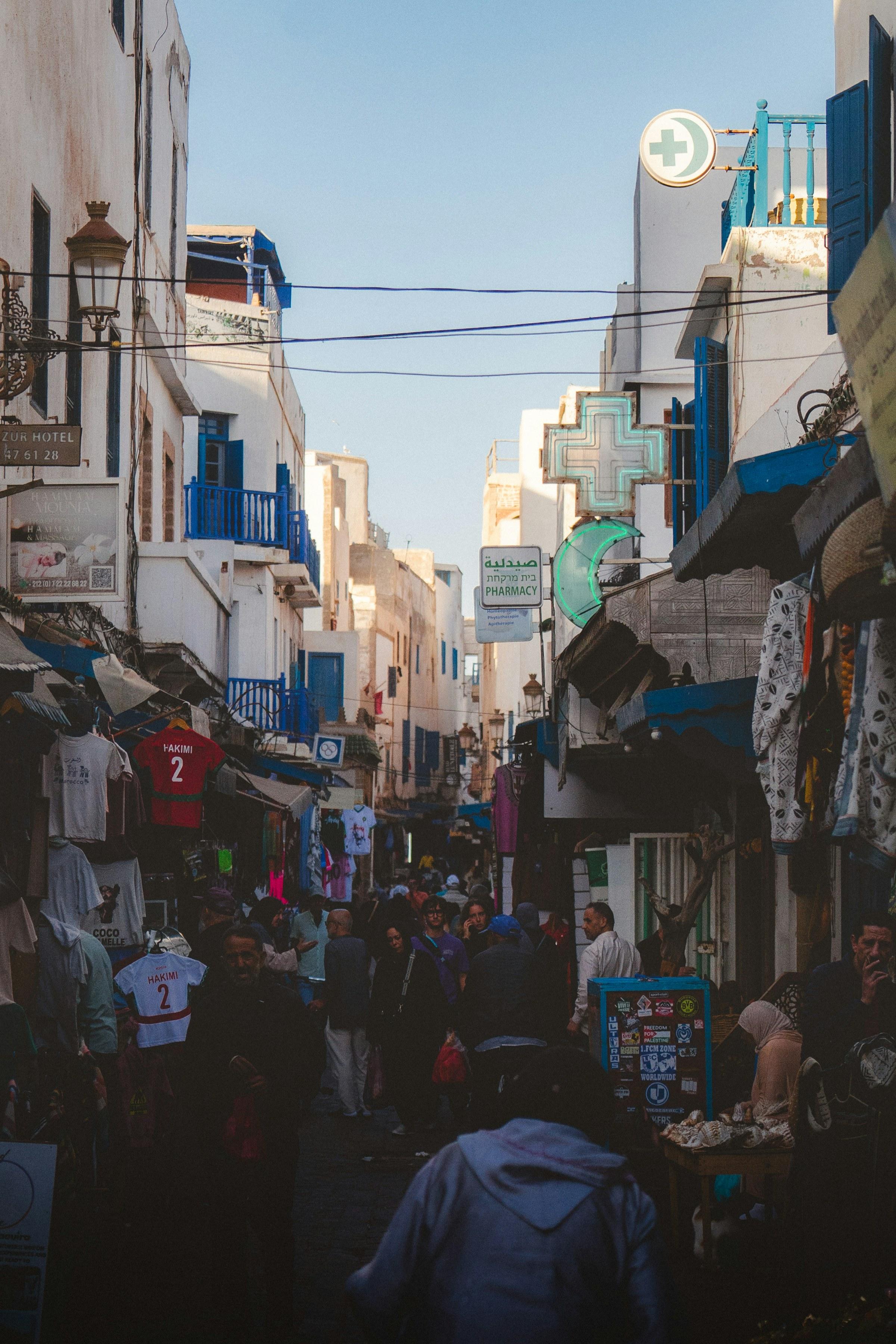
Within the walls, the medina unfolds a labyrinthine network of lanes painted white and blue. The colours evoke sea spray and sky, the ocean and tranquillity.
The rigorous plan lets the breeze circulate through the alleys, bringing coolness into the thickness of the stone. You can sense the care of the Souiri residents, proud of a harmonious aesthetic true to ‘the well-designed one’. The contrast, precise as a brushstroke, charms visitors and holds them.
Local crafts and know-how
Thuya marquetry and woodwork
Craft is part of daily life here. In 2011, 31% of the province’s working population was employed in crafts. Of these, 58% specialised in thuya marquetry, a precious local wood finely cut and inlaid. This rare wood, introduced by Omar Ould El‑Alja, found its ideal playground in Essaouira, between master workshops and a passionate workforce. The chests, boxes and frames tell a story of patience, skill and detail.
Traditional jewellery, leather and textiles
Worked leather, filigree jewellery and embroidered textiles complete this picture of craftsmanship. Jewish goldsmithing, once flourishing, lost its lustre when the community left after 1967, but it lives on in the memory of the Souiris. Tanned leather, soft babouches and embroidered fabrics show that Essaouira still dresses its lanes in its traditions. This work with materials gives the town a tangible imprint, to smell, to touch, to give.
A vibrant cultural scene
Signature festivals
The Gnaoua World Music Festival
Every summer, Essaouira becomes the stage for an intense celebration of music: the Gnaoua World Music Festival. Founded in 1998, it now draws around 450,000 spectators each year over four days in June. It is the ‘Moroccan Woodstock’, a crossroads where Gnaoua maâlems share the stage with jazz, blues, reggae and rock. From the start, the festival has energised the town: a 2014 report shows that every dirham invested brings in up to 17 dirhams in economic benefits. In Essaouira, they say that here people do not just play music, they make the past resonate.
The Printemps Musical des Alizés and other events
Less famous than Gnaoua, the Printemps Musical des Alizés takes place in spring. Its focus is on exchanges between Moroccan and foreign musicians. Essaouira also hosts other cultural gatherings: concerts in riad gardens, poetry evenings, nights with guest artists. In this town split by the wind, every note brings a fresh breath.
Art and creativity
Art galleries, street art and artists’ studios
Essaouira is a showcase for artists. Galleries spring up in the medina like flowers after rain. You will see abstract paintings, ceramics and art objects inspired by the blue of the ocean. Street art has found its playground here too: bright murals tell stories of salt, wind, argan trees and the guembri. Artists’ studios, for their part, open their doors to curious visitors. Here, creativity is not painted only on canvas; it lives in the lanes and courtyards and is passed from hand to hand like a wave.
Essaouira, a town that inspires writers and musicians
Essaouira whispers stories into writers’ ears. Musicians, too, draw inspiration from the sea breeze, the cry of the gulls or the clatter of the qraqeb. The town has attracted authors who found a setting, a rhythm or a character here. People say it is a muse, gentle and rebellious. Here, words glide like waves on the beach, and melodies are born as simply as a breath of sea air.
Essaouira Mogador and the sea: beaches, surf and the Îles Purpuraires
Signature beaches
The town beach and kitesurfing
Essaouira beach is unique: shaped by the trade wind, it offers kitesurfers an exceptional playground. The constant, almost regular winds create a spot with hardly any waves but perfect for flying over the water. You do not go to Essaouira for big rollers; you come to skim the surface. Local clubs rent out equipment every week. For your villa and concierge service in Essaouira, it is a concrete selling point: welcoming board-sports enthusiasts who want to combine tranquillity with the thrill of the sea.
Sidi Kaouki and Diabat: favourite surf spots
25 km south of Essaouira, Sidi Kaouki is rising fast on the Moroccan surf scene. According to available data, the local population was 4,335 in 2004. The beach offers consistent breaks suited to different levels. There are beach breaks, reef breaks and long waves – everything needed to wake up both board and passion. The spot is known for reliable waves all year round, especially in winter. Another asset: the atmosphere is calm and authentic, with an Essaouira flavour. At Diabat, the waves round out the range, often in wilder surroundings, where surfing becomes a dance with the Atlantic.
The Mogador archipelago
The Îles Purpuraires and their ancient history
Off the coast, the Îles Purpuraires tell an ancient story. They were at the heart of the purple trade, the precious pigment prized by Phoenician and Roman civilisations, and later in the Middle Ages. Mogador was also this gateway to a royal colour. These islands hold history like pearls strung along the horizon.
Nature reserve and bird sanctuary
Today, the Îles Purpuraires are a sanctuary for wildlife. The nature reserve is home to seabirds, including cormorants and ospreys. They offer a spectacle that is both visual and alive: the silhouettes of birds in flight are enough to take your breath away. Here, sea, history and nature intertwine. As an expert for your business (mogador‑conciergerie.com), I would note that these islands are ideal for private excursions — a touch of nature and culture for guests in search of something rare.
Tourism and hospitality: Essaouira Mogador today
Charming hotels and riads
Moroccan hospitality: traditional riads
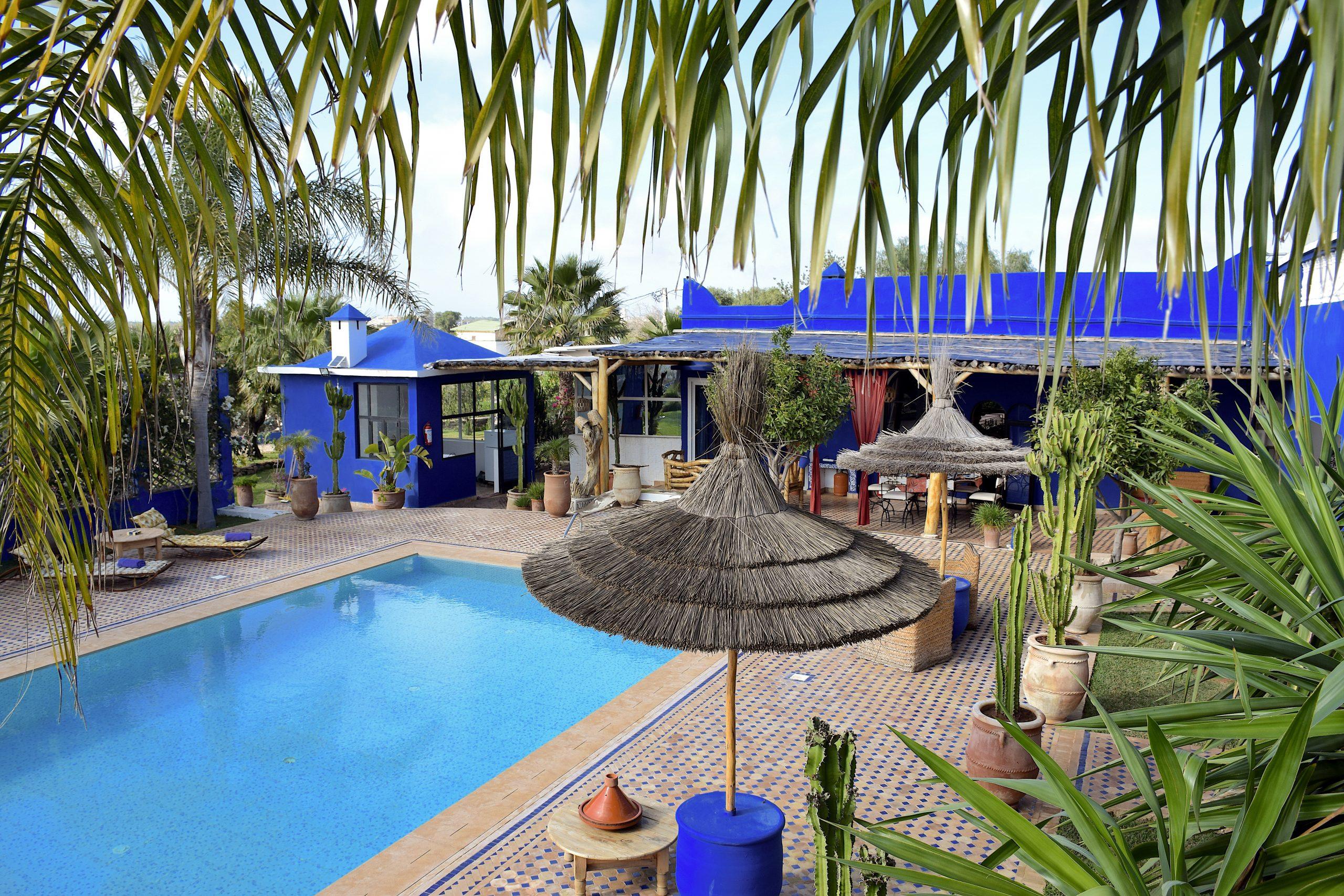
In the calm maze of the medina, traditional riads open their doors like a promise of serenity. These guesthouses, often arranged around a central patio, are warm and human in scale. Every riad invites you to unwind. Whitewashed stone, fountains and zellige tiles tell the story of Essaouira. Service is discreet and attentive. Your hosts at mogador‑conciergerie.com make sure every stay is a breath of authenticity. The charm is real, the addresses reliable.
The big international hotels (Sofitel, Le Médina, etc.)
A short walk from the sea, chain hotels such as the Sofitel Mogador and Le Médina Garden stand ready to welcome discerning visitors. The Sofitel Mogador has recently been included in the large expansion project, with more beds to meet demand. These hotels combine modern comfort with touches of Souiri decoration. They strike a balance between expected luxury and local spirit. For anyone wanting to combine authenticity with high-end service, they are a safe bet.
Local food
Fish and seafood specialities
Essaouira Mogador is a fertile fishing port, fed by Atlantic currents. Sardines, conger eels and locally caught fish land on restaurant plates every day. The ocean end of the town offers stalls by the beach, with smells of salt and grilling. Seafood platters are often ordered for two and shared like a small treasure finished with a squeeze of lemon. It gives the word ‘fishmonger’ a scent of escape.
Tagines, couscous and Moroccan sweets
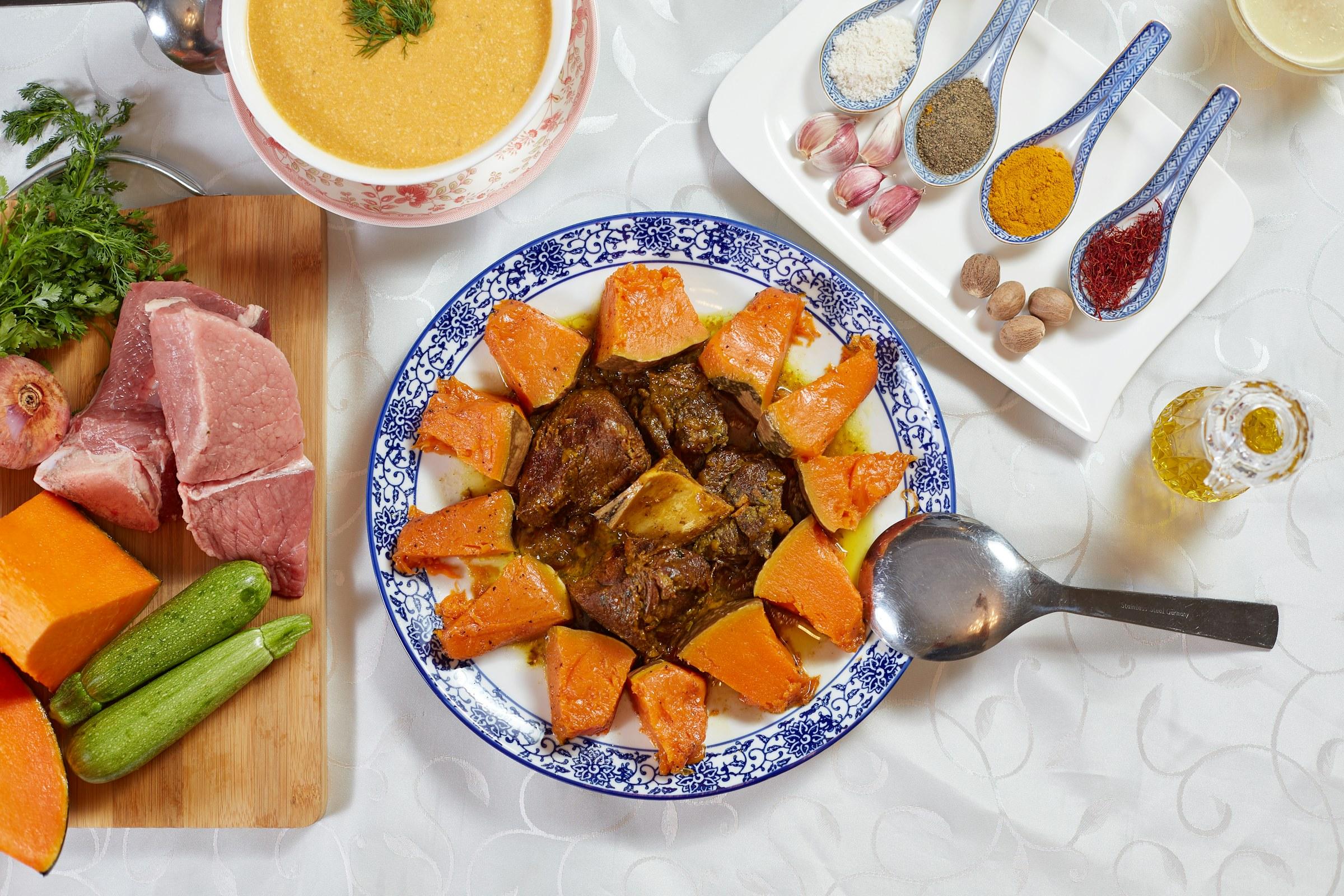
On land, tagines simmer in the town’s riads and food stalls. Lamb with prunes, chicken with preserved lemon or seasonal vegetables: each recipe is a nod to the generosity of the land. Friday couscous brings families together, and the scent of spices floats in the air like an invitation. And for a sweet finish? Honey briouates, cornes de gazelle or crisp chebakias revive the palate. It is all simple and precise, and stays in the memory like a sweet note of Essaouira.
Essaouira Mogador: news and future projects
A destination on the rise
A tourism record in 2024: more than a million visitors
2024 marked a turning point: Essaouira welcomed more than a million tourists, for more than three million overnight stays in classified accommodation. The figure reflects a clear rise: the town is no longer only a summer destination. It is now a year-round destination, lived in and lively every month of the year. People no longer simply come ‘to Essaouira’, they come back — to this town where the wind becomes hospitable and tourism sustainable.
Essaouira, a year-round destination
A cultural capital with a showcase beach, Essaouira no longer lives to the rhythm of summer alone. Autumn festivals, quiet winter breaks, springs given over to walkers… The town breathes at every season. Its gentle breeze, always present, accompanies the stays arranged by mogador‑conciergerie.com, whether for a peaceful weekend or a longer stay. The town is like a book you keep leafing through, season after season.
The major Mogador Tourism Hub project
Investment of 2.3 billion dirhams
The Mogador Tourism Hub project, signed in December 2024, represents an investment of 2.3 billion dirhams (about US$224 million). It is more than a project: it is an ambition. The plan is part of King Mohammed VI’s overall vision to turn the Atlantic seaboard into an international tourism and cultural corridor.
Hotel expansion, golf, Club Med and 20,000 jobs expected
The outline of the project is clear: 3,700 additional beds (+35% accommodation capacity), an extension of the Sofitel, three new seafront hotels, a Club Med, a beach club, a leisure village, a golf course… In all, it is expected to create up to 20,000 direct and indirect jobs. This is not just building hotels: it is building Essaouira’s future, with new forms of hospitality, of cultural offering, of life.
Conclusion (≈ 200–250 words)
Essaouira Mogador embodies a fragile balance between a living past, a thriving culture and a future in motion. Its traditional riads and emerging hotels speak of a hospitality that is both faithful and promising. Its food, between sea and land, is a simple and powerful poem. The real figures speak for themselves: more than a million visitors in 2024, three million overnight stays, visitors all year round – Essaouira no longer lives by the seasons; it is alive all the time.
Projects such as the Mogador Tourism Hub set out a clear horizon: 2.3 billion dirhams invested, 3,700 new beds, a golf course, a Club Med, thousands of jobs. Behind these figures is a town reinventing itself and embracing its cultural, tourism and economic role.
This double identity — living heritage and inspired modernity — makes Essaouira a rare jewel. For anyone who wants to discover, stay, invest or simply let themselves be carried by winds laden with history and future, mogador‑conciergerie.com is here to welcome, advise and make every stay unique. Visit Essaouira now. Discover its riches. And above all, follow the progress of a town on the move — to the rhythm of waves, dreams and projects.
Your most frequent questions about Essaouira Mogador today
What is the best time to visit Essaouira?
Essaouira can be visited all year round thanks to its mild, windy climate, but April to November offers ideal conditions for enjoying the beaches and festivals.
What is the difference between Mogador and Essaouira?
Mogador is the town’s old Portuguese name, while Essaouira refers to the modern medina founded in the 18th century by Sultan Mohammed ben Abdallah.
What is the best accommodation for a stay in Essaouira?
Traditional riads in the medina offer an authentic experience, while hotels such as the Sofitel or Le Médina guarantee high-end comfort.
What is there to do in Essaouira besides the beaches?
Wandering the UNESCO-listed medina, visiting art galleries, attending festivals or exploring the Mogador archipelago all offer a unique cultural immersion.
What are the future tourism projects in Essaouira?
The Mogador Tourism Hub plans to invest 2.3 billion dirhams to expand hotel capacity, create a golf course and a Club Med, and generate up to 20,000 jobs.
Our new addresses, before anyone else
One letter a month: newly opened villas, seasonal stays, good tables. Nothing more.